Recovering a Crashed Drone from a Tree: Safe Retrieval Techniques
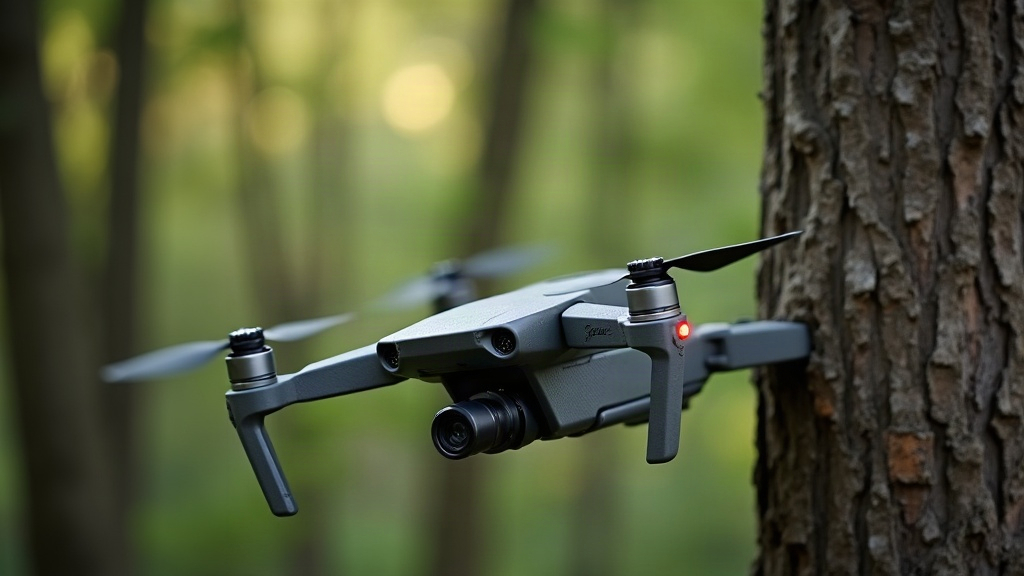
Nothing kills the buzz of a good flying session like the crunch of plastic hitting leaves, followed by that awful silence. Getting a crashed drone out of a tree is basically a rite of passage. Almost every pilot goes through it eventually. But rushing the rescue is how people end up with a fried gimbal, snapped motor arms, or a trip to urgent care. Slow down, grab the right tools, and follow a plan. Here’s what to do the moment your drone goes down in the branches, the retrieval tricks that actually work, and the mistakes that turn a bad day into a much worse one.
Step 1: Immediate Post-Crash Assessment
Before you go hunting for a pole or a ladder, handle these three things first.
- Kill the Motors Immediately: If the drone is tangled in branches, the props are obstructed, full stop. Let the motors keep trying to spin and the ESCs will cook themselves in a matter of seconds, sometimes less. Hit disarm right away, don’t think twice about it.
- Pinpoint the Exact Location: Here’s the thing about trees: they all start looking the same about ten seconds after you walk away. Stand directly beneath the drone and drop something bright, a jacket, a backpack, anything you’ll recognize later. If the canopy’s too thick to see through, pull up the last known GPS coordinates on your controller screen.
- Assess the Battery Risk: A punctured LiPo isn’t just annoying, it’s genuinely dangerous. Sweet chemical smell? Smoke? Walk away and call the fire department. This isn’t the moment to be a hero over a $30 battery.
Safe Retrieval Techniques and Tools
The right method depends entirely on how high the drone is lodged. Below are the approaches that consistently work, roughly ordered by height.
1. The Telescoping Pole Method (Below 30 Feet)
Stuck in the lower canopy? A telescoping fiberglass or aluminum pole will probably do the job. A pool skimmer, a roof-rake extension, even a long painter’s pole from the garage, any of these can work in a pinch.
- How to do it: Resist the urge to jab and poke, you’ll just knock the drone deeper into the branches or crack a prop. Tape a sturdy wire hook, an old coat hanger, or a soft microfiber duster to the end of the pole instead. Slide the hook gently under the landing gear or a motor arm and lift it free, slow and steady.
- Pro-Tip: Go fiberglass over aluminum if you have the choice. It won’t conduct electricity if the pole happens to brush a hidden power line, which matters more than people think.
2. Weighted Line and Throw Bag (30 to 50 Feet)
For a higher rescue, steal a page from professional arborists and use a throw bag. All you need is heavy-duty paracord and a small beanbag or a purpose-built arborist throw weight.
- How to do it: Tie the weight onto the paracord and toss it over the actual branch the drone is resting on, not near it, over it. Once the line drapes down on both sides, grab both ends and give the branch a firm, steady shake.
- The Catch: Get two friends to hold a blanket or tarp stretched out like a fireman’s net underneath. A drone falling 20 feet onto bare dirt is not going to survive it intact.
3. Slingshot and Fishing Line (Precision High-Altitude Rescue)
Can’t get a throw bag high enough? A wrist slingshot loaded with fishing line can reach surprising heights, sometimes 60 feet or more.
- How to do it: Attach a lead fishing sinker to high-visibility, heavy-test braided line. Shoot the sinker over the target branch. Fishing line alone is too thin and too likely to snap under repeated shaking, so use it as a pilot line to haul up a thicker paracord, then shake that instead.
What NOT to Do (Avoid Further Damage)
Frustration makes people do dumb things. Here’s what to skip.
- Throwing Rocks or Baseballs: The odds of clipping the exact branch cleanly are low. What usually happens instead is you smash the camera gimbal or snap an arm clean off.
- Using a Water Hose: Blasting the drone with a jet of water might knock it down, sure, but it’ll also fry the motherboard, the motors, and the battery on the way. You’ll get a drone-shaped brick.
- The “Rescue Drone” Fallacy: Flying a second drone up to bump the first one loose sounds clever in theory. In practice it almost always ends with two drones stuck in the same tree instead of one.
- Unsafe Climbing: Unless you’ve got a harness, ropes, and spikes and actually know how to use them, stay off the tree. A $1,500 drone is not worth a fractured vertebra.
When to Call the Professionals
Once you’re talking 50+ feet, power lines nearby, or a drone hopelessly wrapped in thick vines, it’s time to just call someone.
Local arborists or tree-trimming outfits are usually your best bet. They’ve got bucket trucks, proper climbing gear, and the liability insurance to cover it if something goes wrong. Most will pull a drone down for somewhere between $50 and $150. Compare that to the cost of a decent DJI or FPV rig, easily $1,000 or more, and paying a pro starts to look less like giving up and more like basic math.
Conclusion
Bringing a crashed drone down out of a tree really comes down to staying calm and using the right tool for the height involved. Cut the motors fast, figure out how far up it actually is, then work the problem with a pole, a throw bag, or a slingshot line depending on what you’re dealing with. Keep a tarp on hand for the catch, and if the situation looks even slightly too risky for a DIY attempt, just call an arborist. Your drone, and your back, will thank you.