Flying Drones Over Water: Pre-Flight Checklist & Rescue Tips
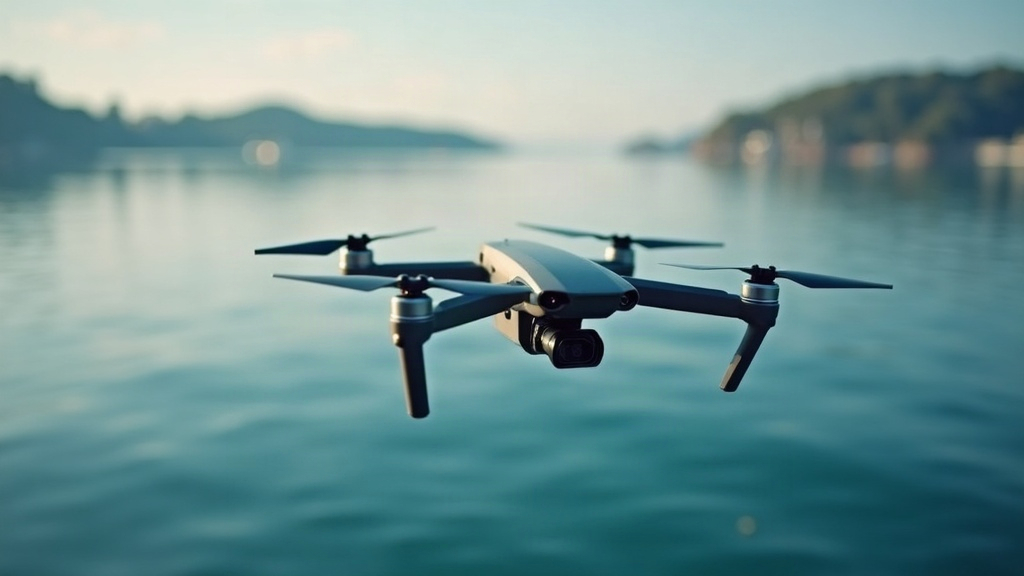
Flying a drone over water gets you shots you simply can’t get any other way. Rippling reflections, that endless horizon line, a boat cutting a wake below you. It’s gorgeous. It’s also one of the easiest ways to turn a $1,500 camera into an expensive paperweight. Lose GPS lock for a few seconds, catch a gust you didn’t see coming, or watch your battery drop faster than expected over open sea, and a dream shoot becomes a very wet problem. Here’s the pre-flight routine pros actually run through before launching over water, along with what to do if things start going sideways mid-flight.
Why Water Flights Are Riskier Than Land Flights
Water doesn’t reflect light the way grass or pavement does, and that throws off the downward-facing sensors most drones rely on for stabilization and obstacle avoidance. GPS can get flaky too, since open water gives satellites and the drone’s positioning system fewer reference points to work with. Add in wind that swirls unpredictably near shorelines (it behaves nothing like the wind forecast you checked that morning), and you’ve got an environment that doesn’t forgive sloppy habits.
A few risks specific to water:
- No safe emergency landing zone. On land you can at least aim for a patch of grass. Over water, there’s nothing.
- Sensor confusion. Glare and reflections off the surface can trick some models into reporting a false altitude.
- Signal interference. Boats, buoys, even cell towers near the coast can mess with your control link.
- Corrosion risk. A splash of saltwater does far more damage than fresh water ever would, and much faster too.
Pre-Flight Checklist for Flying Over Water
1. Check Wind and Weather Conditions
Open water wind is almost always gustier than what the forecast says, mostly because there’s no terrain around to slow it down. Check conditions both at ground level and at your actual flying altitude, say 100 to 400 feet. If sustained winds are pushing past 15-20 mph, or gusts feel erratic, just wait. The shot isn’t worth it.
2. Inspect for Waterproofing and Corrosion Protection
- Most consumer drones aren’t water-rated, period. If yours isn’t, spray a hydrophobic coating on the body and camera housing before heading out.
- Check the props and motor housings for any corrosion left over from past flights, especially if you’ve flown near salt spray before.
- If your model supports it, carry a flotation accessory. Some aftermarket kits bolt on buoyant skids that can keep a downed drone afloat long enough to grab it.
3. Verify GPS Lock Before Takeoff
Don’t launch until you’ve got a solid lock, ideally 10 or more satellites. Taking off with a weak signal over water is asking for drift, and it gets worse the moment Return-to-Home kicks in.
4. Set a Safe Return-to-Home (RTH) Altitude
Set RTH higher than anything between you and the launch point: boats, masts, bridges, cliffs, whatever’s in the way. Over open water, 100+ feet is a reasonable floor.
5. Launch From a Stable, Dry Surface
Don’t just hit auto-takeoff from a rocking boat deck and hope for the best. If you’re launching from a boat, have someone else hold position steady and cut down on vibration, and consider hand-launching instead of relying on the auto sequence.
6. Monitor Battery Levels More Conservatively
On land you might push to 20-30% before heading back. Over water, start your return at 40%. Headwinds on the way home eat battery faster than you’d think, and you want enough buffer to hover if an emergency pops up.
7. Keep Visual Line of Sight (VLOS)
Glare off the water makes it surprisingly easy to lose track of your drone, even at moderate distances. Polarized sunglasses help a lot, and try to position yourself with the sun at your back rather than in your eyes.
What To Do If Your Drone Loses Control Over Water
Step 1: Don’t Panic, Check Signal First
Lost the video feed but the controller still shows a connection? Don’t mash RTH right away. Give it 5-10 seconds. Plenty of signal drops are momentary and resolve on their own.
Step 2: Trigger Return-to-Home Immediately
If the feed doesn’t come back, trigger RTH manually yourself rather than waiting for the drone to do it automatically. Automatic triggering often takes longer to kick in, and every extra second means more drift off course.
Step 3: If It’s Going Down, Steer Toward Land or a Boat
If a water landing looks unavoidable, use whatever control you’ve got left to steer toward the nearest solid ground, even a rocky shoreline beats open water. A controlled splashdown close to land is dramatically easier to recover from than one in the middle of a lake or bay.
Rescue Techniques If Your Drone Lands in Water
- Act fast. If it’s freshwater, you’ve generally got a 1-2 minute window where the drone is still recoverable, but only if you retrieve it and power it off immediately. Do not, under any circumstances, try to restart it.
- Pull the battery first once you’ve got the drone in hand, to avoid a short circuit. If it was saltwater, rinse the whole thing in clean fresh water right after.
- Dry it out properly. Silica gel packets or desiccant packs work much better than the old rice trick. Give it at least 48 hours before even thinking about powering it on.
- Use GPS tracking apps, like DJI’s Find My Drone, to get the exact crash coordinates so you (or a buddy with a kayak) can find it fast.
- Keep a recovery kit on hand: a small dry bag, a collapsible net, and a drone-safe flotation ring. Cheap insurance for ocean or lake shoots.
Final Tips for Safer Water Flights
- Always bring a spare battery and a backup controller cable. You will eventually need one of these at the worst possible moment.
- Practice over calm, shallow water first. Save the open-ocean, center-of-the-lake shots for once you’ve got the routine down.
- If you fly over water regularly, get insurance. Most standard drone warranties flat-out exclude water damage.
Conclusion
Water footage is some of the best footage you’ll ever capture, but it comes with a price: more prep, more caution, less room for error than a routine land flight. Run the checklist every time, wind, GPS, battery margins, waterproofing, and your risk drops dramatically. And if things do go wrong, how you react in the first couple of minutes usually decides whether it’s a story you tell later or a drone you never see again. Treat every water flight like the calculated risk it actually is, and your gear (and your footage) will hold up a lot better for it.