Racing Drones vs Camera Drones: Best First Build for Urban Exploration
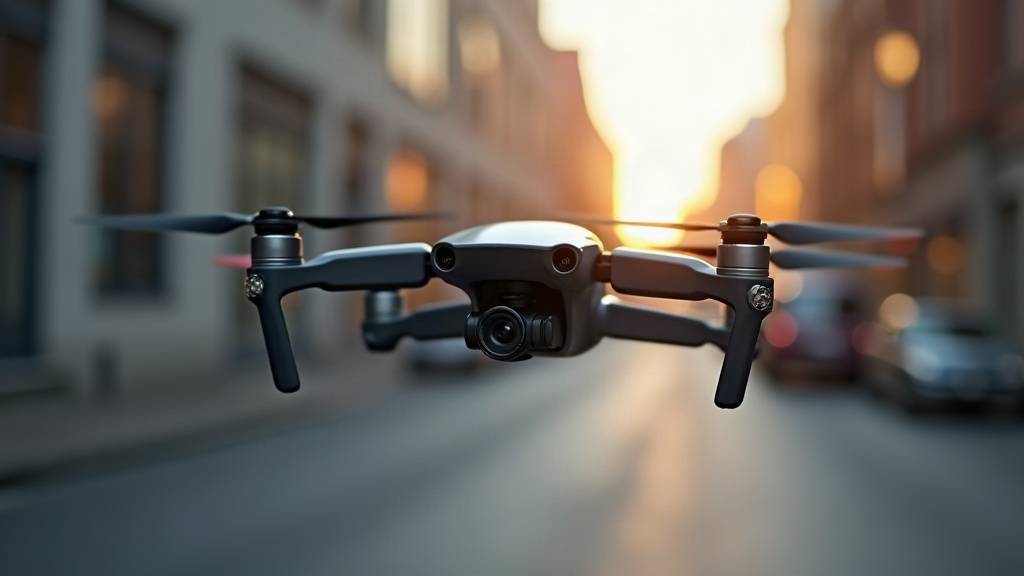
If you’re putting together your first drone build for shooting cityscapes, rooftops, alleyways, and those tight urban corridors, it really comes down to one choice: racing drones (FPV) hand you speed, agility, and that diving point-of-view footage through tight gaps, while camera drones (GPS-stabilized quads like the DJI Mini or Air series) hand you ease of use, stable 4K footage, and much longer flight times with almost no learning curve. Neither one wins outright. It depends on what kind of urban content you’re trying to make, and honestly, how much time you’re willing to sink into learning to fly.
What Makes Urban Exploration Different
Urban environments chew up drones that weren’t built for tight, fast, unpredictable flying:
- Confined spaces — alleys, parking garages, stairwells, underpasses
- GPS interference — tall buildings block satellite signal, which cripples GPS-dependent camera drones
- Quick reflexes required — pedestrians, wires, signage, and sudden obstacles show up with almost no warning
- Visual style — the “diving through a window” or “flying under a bridge” shots that make urbex videos blow up are simply not possible on a GPS camera drone
This is why a lot of serious urban exploration creators end up owning both types eventually. But your first build should match what you actually want to do, not what looks cool on paper.
Racing Drones (FPV): Built for Speed and Tight Spaces
FPV (first-person view) drones are flown manually using goggles, so you get a direct pilot’s-eye view of everything. Most of the time they’re built from individual parts: frame, motors, flight controller, VTX, rather than bought as a finished product off a shelf.
Strengths:
- Can thread through narrow gaps, dive down stairwells, and hit 60+ mph without blinking
- No GPS required, which makes them great in signal-dead urban canyons
- Delivers that dynamic, immersive footage urbex channels are known for
- Highly customizable and repairable (crashes aren’t a maybe, they’re a when)
Weaknesses:
- Steep learning curve. Expect weeks in a simulator before you ever fly for real
- Flight time is short, usually 3-6 minutes per battery
- Footage needs more post-production stabilization unless you add a gimbal camera like a DJI O3 Air Unit
- Crashes happen often, and in a city that means concrete, glass, and people
Typical first build cost: $250-$450 (5-inch freestyle/race frame, goggles, radio, batteries)
Camera Drones: Built for Stable, Polished Footage
Camera drones like the DJI Mini 4 Pro or Air 3S lean on GPS and obstacle sensors to hover and fly smoothly without much pilot input at all.
Strengths:
- Ready to fly straight out of the box, often within 30 minutes of unboxing
- Excellent stabilized 4K/HDR footage without any editing gymnastics
- Long flight times, 30-45 minutes per battery is typical
- Safer for beginners thanks to auto hover, return-to-home, and obstacle avoidance
Weaknesses:
- GPS drift or outright signal loss is common between tall buildings
- Can’t physically squeeze through narrow gaps or fly inverted through a window
- Obstacle sensors can get confused near reflective glass facades and behave erratically
- Plenty of cities restrict GPS camera drones more heavily than FPV rigs (check local drone laws before flying near landmarks or crowds)
Typical cost: $400-$1,200 depending on sensor size and range
Which Should Be Your First Build?
Ask yourself a few honest questions:
- Do you want immersive, fast-paced footage, diving through gaps, racing down streets? → Go FPV/racing.
- Do you want polished establishing shots and skyline footage with minimal risk? → Go camera drone.
- Are you okay crashing repeatedly while you learn? → FPV demands this; camera drones mostly spare you from it.
- Is your city dense with GPS-blocking buildings and full of indoor or underground spots? → FPV performs far better without a satellite lock.
- Do you want to start publishing content right away? → Camera drones let you post from day one.
A Practical Middle Path
A lot of urban explorers start with a cinewhoop, a ducted, smaller FPV frame (3-inch props with prop guards) that’s safer indoors and slower than a full race quad, but still manually piloted. It splits the difference: you get genuine FPV flying in tight spaces without the brutal learning curve of a full 5-inch freestyle rig. Think of it as training wheels that still let you dive through a doorway.
Final Verdict
For pure urban exploration content, the tight squeezes, the rooftop-to-rooftop jumps, the fast alley chases, a racing-style FPV build will get you footage a camera drone simply can’t replicate. But if your priority is reliable, stable, publish-ready footage with minimal risk and the fastest path to actual content, a camera drone is the smarter first buy. Plenty of creators end up owning both eventually. If your budget only covers one build right now, match it to the footage style you actually want to produce, not to whichever rig looks most impressive sitting on a shelf.